



Lees je liever de Nederlandse versie?
In the final session of a mindfulness or compassion training, there is always attention for what comes next. Because once you’re on your own after eight weeks of intensive practice, choices have to be made. Recently I wrote about how you might continue after your training. This piece is about a very common stumbling block in meditation.
When practice stalls
Eventually every practitioner encounters it: meditation quietly slips into the background for a while. A busy period at work, worries at home, a trip away—there are plenty of reasons why practice falls by the wayside. Or perhaps simply a break after all those weeks of training.
For me, the practice dip very often falls in the holiday season. And that’s where I learned an important lesson.
Good intentions
When I first felt, years ago, that meditation was truly something for me—that I was benefiting from it and that it had found a permanent place in my life—I wanted to hold onto that feeling at all costs. So I resolved to take my meditation cushion on holiday. So I wouldn’t lose ‘the feeling.’
At that time we went every year to the island of Ameland in our old caravan. A wonderful island, with plenty of time to read and meditate. The cushion was the first thing packed when we loaded the caravan.
Three weeks later, when we got home, it was the last thing to come back out.
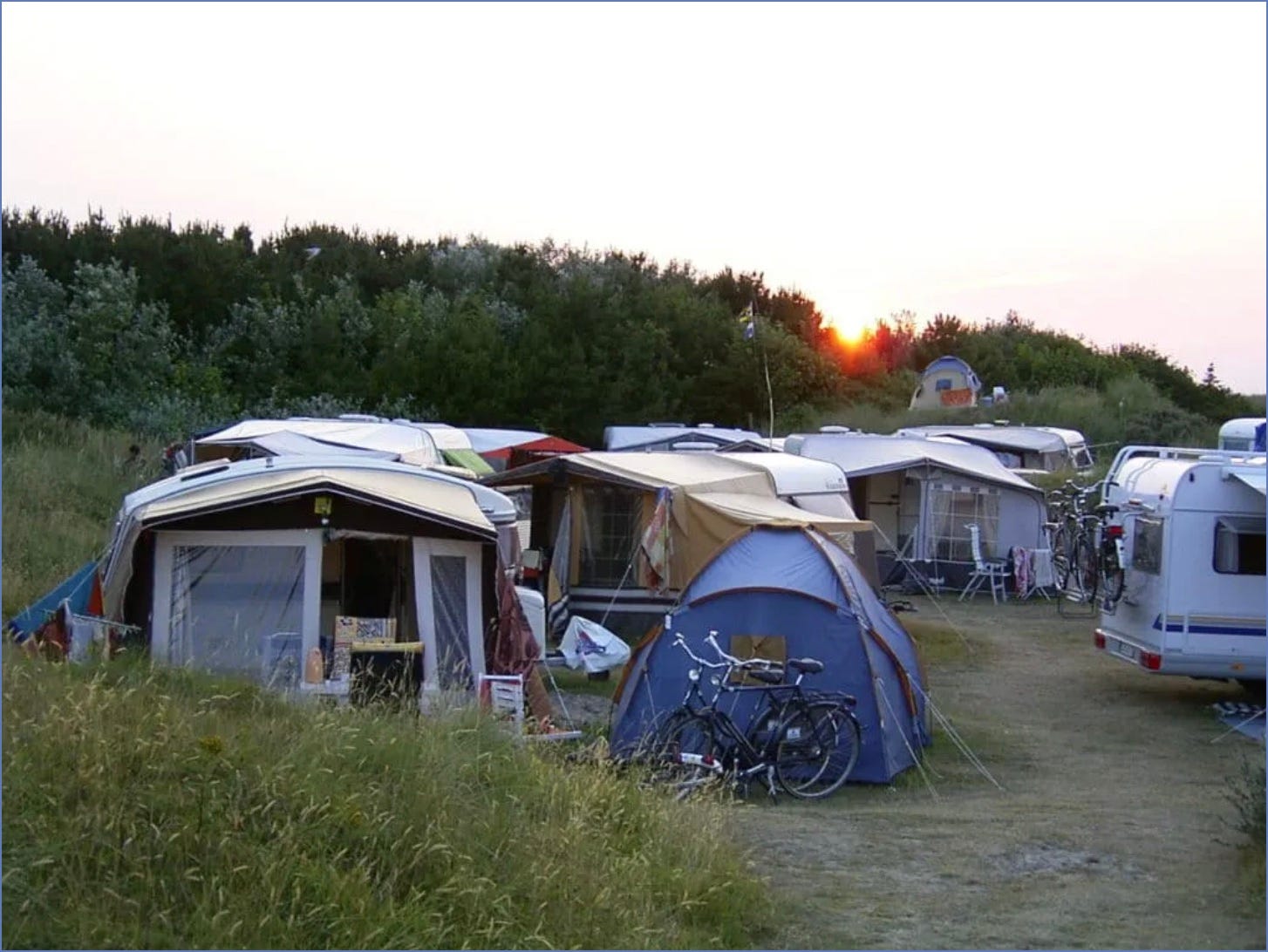
Lost everything?
It had been an incredible holiday, as it almost always is on the Wadden Islands. Wonderfully relaxed, books read, hours enjoyed on the beach and at various terraces and beach pavilions. But meditate? Not once.
Despite the lovely holiday, I felt genuinely disappointed. A familiar inner voice made itself heard: now I’ve lost everything, I’ll have to start from scratch; it was all for nothing.
I heard similar things from former participants I spoke with afterward: once the motivation is gone, there’s no point anymore. Too late. You might as well stop. And then comes the self-criticism: Useless. You can’t even keep that up.
When I recognized that in myself, I finally understood just how powerful that mechanism is.
But wait a moment…
Because—what is meditation actually about? What is the essence that all those famous teachers whose books I had studied keep pointing to?
Is meditation really an achievement you build up and can then lose again? Do past results guarantee future ones?
No—meditation is precisely about sitting down each time as if it were the first time. That is precisely the beginner’s mind we want to cultivate. When that truly landed for me, I realized nothing had been lost, and a weight lifted from my shoulders.
What do you actually lose when your practice stalls for a while? And is there a better option than simply starting again, picking up where you left off? No—more than that: it was always the only option you ever had: just begin again.
Make music
If you haven’t played the piano for a while—a metaphor I like to use, and one I’ll work out fully in an article someday—your fingers may feel a little stiff. There may be resistance to lifting the lid again. You might conclude that there’s no point anymore. But you wouldn’t throw away years of piano lessons, would you?
A pianist sits down and plays. And soon notices that the stiffness fades, often sooner than expected. After enough practice, the music lives in you; you pick it up quickly again—your fingers seem to know it too.
Meditation works no differently. You can stop, or you can simply begin again. Whether the last time was yesterday or three months ago. That is the heart of it: beginning again, always. Without seeking a result, without expecting progress, without demanding calm or a quiet mind. And then being surprised to find that the meditation is still there in you.
Welcome back
So: if your practice has lost its momentum and you’re suffering under the illusion that it’s too late—rest assured. You can let go of the self-criticism and simply begin again. Just as every other practitioner does every day, including those whose practice just happens not to have lapsed right now.
In meditation, there is always another chance. With every breath, even.
Or, as the Sufi mystic Rumi wrote:
Come, come, whoever you are!
Wanderer, worshipper, lover of leaving.
It doesn’t matter.
This is not a caravan of despair.
Come, come.
Even if you have broken your vows a thousand times.
Come,
come again,
come!
If you found this article worth reading and (not yet) feel like getting a paid subscription, you can always treat me to a cappuccino!