
Learning to Sit Still
The English author Tim Parks wrote ‘Teach Us to Sit Still’. I received the book last year on my birthday. Parks had unexplained pains in his lower abdomen. No doctor could help him. Raised in evangelical-Protestant circles and long since a non-believer, the writer reveals himself to be a great skeptic when he takes up meditation. But he has no choice. Only silence and concentration — particularly the so-called vipassana meditation, from which mindfulness training is derived — prove to help him.
It is a book I read with great pleasure. Frank and honest. Parks is entirely himself when he describes how he wrestles with his complaints, and his skepticism toward meditation is beautifully rendered. Recognizable, at least to me — partly from my own history, and partly from the reactions I still occasionally receive from people who believe that meditation is an escape from reality, rather than a genuine encounter with it.
Ultimately, Parks writes something remarkable about what he discovers in that stillness:
Language builds domes, and builds other domes on top of them when the first ones fade. Because words are never still. The beginning of a sentence directs attention forward; the end requires you to hold the beginning in mind. One paragraph leads to the next, and this page to the following one. The eyes are ahead of the lips. Reading, we turn the page while the last line of the previous one still needs to settle in our heads. As I type, my thoughts run ahead of my fingers. Driven forward. Never in the now. Never possessed by this moment.
That last sentence touches something in me. “Driven forward. Never in the now. Never possessed by this moment.” Parks describes here how our thinking constantly pulls us away from what is truly present. We are always on the way to the next sentence, the next thought, the next solution. And it is precisely in that perpetual rushing forward, in that relentless search for a way out, that we miss what is here now.
The Wisdom of Having Enough
There is a beautiful story about a fisherman who finds a copper bottle with a lead stopper in his net. He opens the bottle, and before him appears a powerful spirit capable of granting any wish. The liberated spirit says to the fisherman: “You may make three wishes and I will fulfill them. What is your first wish?”
The fisherman thinks for a moment and then says: “I wish you to grant me the wisdom to make the right choice for my remaining two wishes.” “It is done,” says the spirit. “And what are your other wishes?”
The fisherman is briefly silent. Then he says: “Thank you. I have no further wishes.”
This story, from ‘Keys to the Heart’ (Asoka Publishers), touches on the same thing toward which Parks is writing. True wisdom is not the fulfillment of all our wishes, but the recognition that we actually need nothing beyond what is already here. It is the capacity to be still with what is, rather than constantly striving for what ought to be.
The Paradox of Acceptance
What both Parks and the fisherman discover is something paradoxical: it is precisely in relinquishing the struggle, in accepting what is, that space for change arises. Parks found no solution to his pain by fighting harder or by consulting more doctors. He found relief by becoming still, by being present with his experience without constantly trying to change it.
That may well be the hardest lesson in dealing with the difficult things in life. We are so accustomed to solving problems, to striving for improvement, to fighting against what we do not want. And sometimes that is necessary. But there is also another way: the path of acceptance, of being present with what is difficult without immediately needing to do something about it.
The Fisherman Who Sits Still
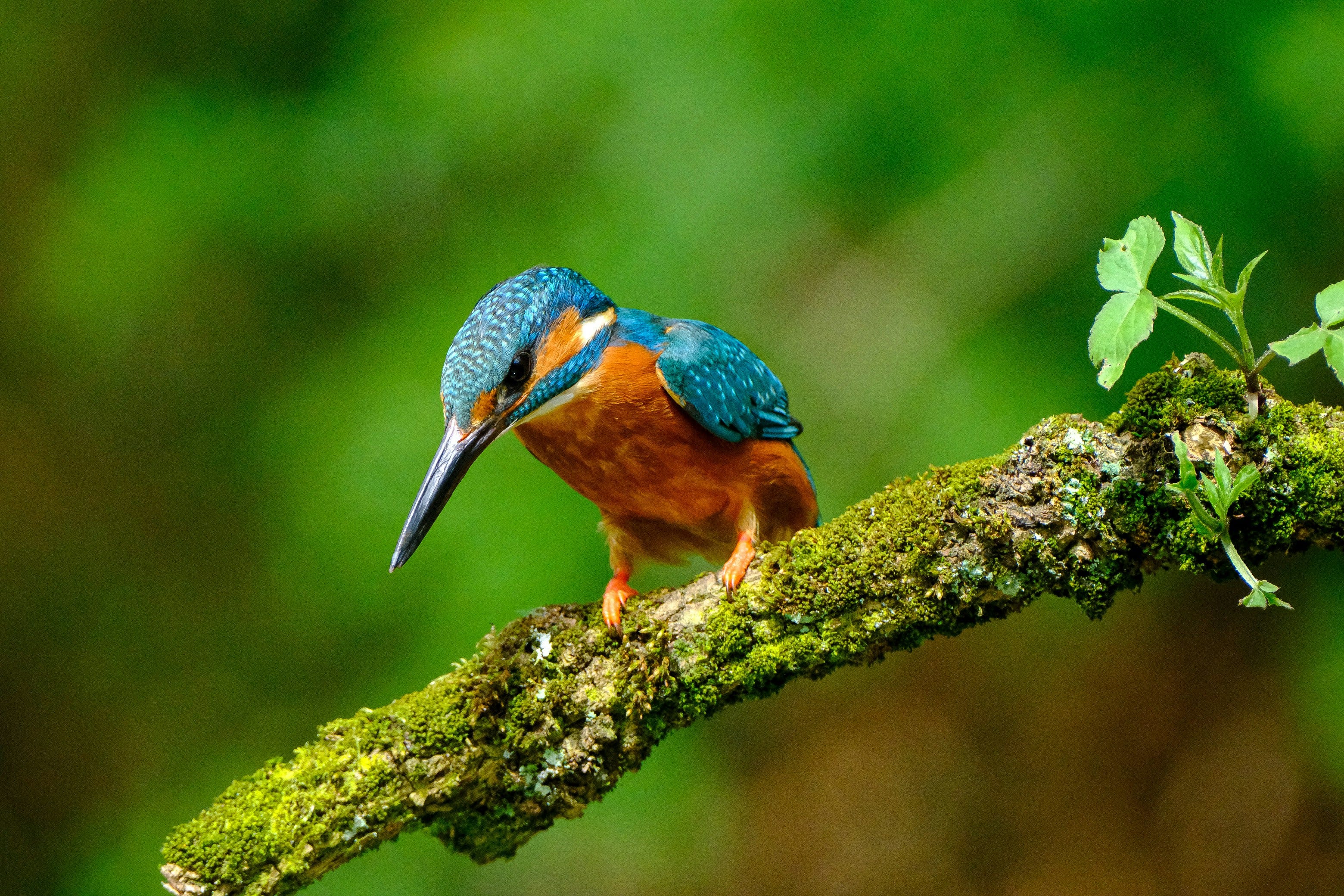
As I was writing, I found myself thinking of a video I saw some time ago. A motionless kingfisher, moving in harmony with whatever the moment brings — in this case, moving without complaint or resistance with the way the wind blows. The result: a clear view of the fish and, with a little luck, a successful hunt. That would likely have been different had there been resistance to the wind.
A beautiful example of moving with the flow, having no further wishes, being fully in the moment.
On Acceptance
Acceptance is neither passivity nor resignation. It does not mean approving of what happens, nor that you have to like it. It is an active form of wisdom. The fisherman does not choose to make no choice out of apathy. He chooses it because he recognizes that what is present in this moment is enough. Parks does not meditate because he has given up. He meditates because he discovers that stillness and presence contain a different kind of strength than fighting and striving.
Never Possessed by This Moment
“Driven forward. Never in the now. Never possessed by this moment.” These words of Parks describe, in essence, the core of much human suffering. We live in stories about how things were and how they ought to be. We build, as Parks so beautifully puts it, domes of words and thoughts, and build other domes on top of those. We are perpetually in motion, always on the way to what comes next.
But what if we were to stop all that doing? To simply be here for once, and to find peace in that? What if wisdom lies not in the fulfillment of all our wishes, but in recognizing that we are already complete, here and now?
That may well be the best advertisement for mindfulness I could wish for: not as a technique for solving problems, not as a path to get somewhere or as an escape from reality — but as a way to finally allow ourselves to already be here. Right in the middle of reality.
If you found this article worth reading and (not yet) feel like getting a paid subscription, you can always treat me to a cappuccino!


