

Tai Chi Practice and the Prevention of Heart Disease
By Tai Chi Grandmaster William C. C. Chen


Lees je liever de Nederlandse versie?
Over the years, Grandmaster William C. C. Chen has never stopped developing. There is a remark of his that I heard him make somewhere in the 1990s and will not easily forget: “After 50 years of practicing Tai Chi, I discovered something.” He would then share this discovery, and we would spend the entire day exploring it in our training, trying to find or apply it ourselves. It is the hallmark of a true master: always remaining a student.
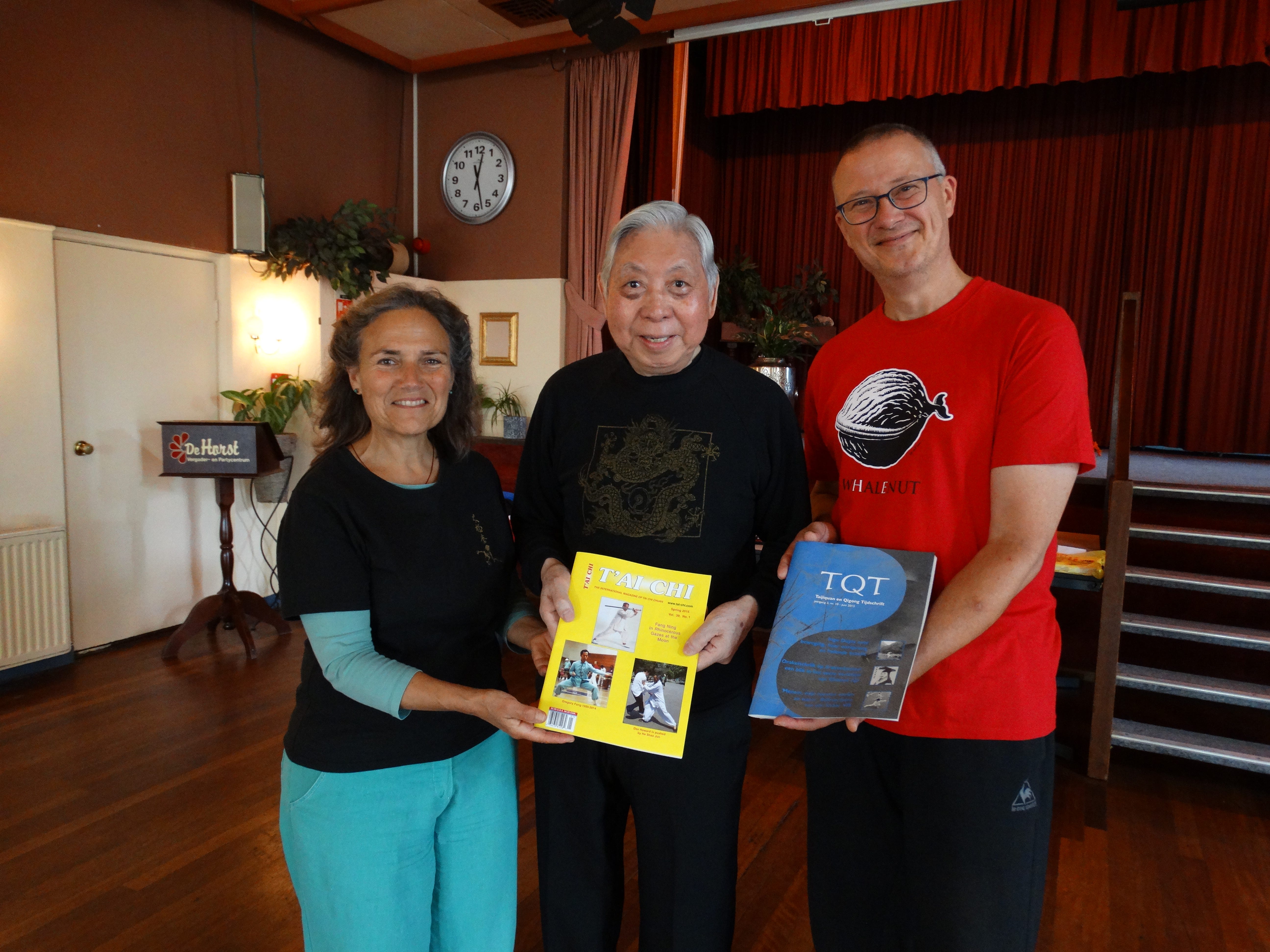
William Chen was always a very practically oriented Tai Chi teacher, with a strong focus on martial applications and boxing. The subject of health was not something he emphasized greatly—that began to change around 2012 and beyond. In 2015 he wrote the article below, which he gave me permission to translate, with assistance from my teacher, Master Laura Stone.
The translated article appeared in TQT Magazine, which no longer exists. I felt it was worth making it available to the public once more. Voilà:
Tai Chi Practice and the Prevention of Heart Disease
The most important steps in preventing heart disease are movement, together with healthy nutrition, healthy sleep, and healthy thinking. Exercise helps to relax the muscles of the rib cage and give the organs sufficient room to function.
Improving the lubrication and oxygenation of the organs is one of the fundamental ways to remove bacteria, viruses, and toxins and contributes to the better functioning and health of all organs—especially to the vitality of the heart.
There is nothing magical about the positive effects of the magical art of Tai Chi practice on heart disease. It is simply a matter of relaxing the muscles of the rib cage while the arms float upward and the elbows move slightly outward to keep the armpits open, thereby increasing the volume of the torso. This helps the organs to function effectively through the enlarged space in the chest cavity. At the same time, deep breathing provides sufficient oxygen to the blood and removes carbon dioxide from the body, allowing us to live long and in good health. This is the primary purpose of the slow tempo of the movements.
Synchronizing the soft, slow movements with deep diaphragmatic breathing is one of the best ways to prevent heart disease. Exhaling calms the nerves and relieves muscular tension. When the muscles of the rib cage are relaxed, the arms float upward and the armpits open slightly. The result is an increase in the volume of the torso, giving the organs more room to function optimally.
Deep diaphragmatic breathing brings more oxygen into the lungs than ordinary breathing. More oxygen-rich blood from the heart stimulates the functioning of the immune system, making it easier for the body to detoxify. We aim to keep the heart functioning well.
The heart is the hub of the organs, pumping oxygen-rich blood (氣血) throughout the body. All major aspects of fitness, health, and life itself depend on the functioning of the heart. The organs depend on the heart for their proper functioning. Every organ, tissue, and cell in the body depends on the blood pumped by the heart for optimal performance.
Although emotional stress is a natural part of life, the excessive and persistent worry, anxiety, and despondency that accompany stress are highly damaging. Stress causes the muscles of the rib cage to contract. The diaphragm rises and the arms fall against the rib cage. This reduces the volume of the torso, impairing blood flow to the organs and potentially overburdening the heart.
A poorly functioning heart pumps less oxygen and nutrients to the organs and removes fewer waste products, toxins, and carbon dioxide from the body. This inevitably leads to tissue poisoning and organ failure, resulting in a number of heart-threatening conditions.
Heart disease is the leading cause of death in the United States, with nearly 2,000 deaths per day. Each year, approximately 720,000 Americans suffer a heart attack—515,000 of them for the first time, and 205,000 having had a previous heart attack. A major cause of heart disease is excessive strain on the organs. Lack of space and poor circulation of the heart gives rise to disease.
The importance of exercise in preventing heart disease has been repeatedly demonstrated by experts in the field. The CDC Division for Heart Disease and Stroke Prevention (DHDSP), for example, states in its summary of risk factors and recommendations that adults are advised to engage in two and a half hours of physical activity per week.
The Ohio State University Medical Center lists fitness as a means of preventing heart disease. Exercise is nature’s medicine—more powerful than any pharmaceutical in restoring and rejuvenating the human heart and organs.
Daily movement is essential for the heart. Researchers have concluded that exercise is a superior method for keeping our hearts healthy, noting that regular gentle movement is better than short, intense, and more strenuous workouts. Exercise helps to loosen overtaxed muscles throughout the body, allowing everything to function more smoothly and efficiently.
The slow-motion practice of Tai Chi Chuan is strongly recommended by physicians. The slow movements calm the nervous system and relieve excessive preoccupation with worry, anxiety, and despondency. The muscles of the rib cage relax and the volume of the torso increases, creating more space and improving organ function.
Enlarging the space of the torso allows the lungs to function better by enabling a full inhalation and exhalation. At the same time, the toes press into the ground and the fingers push against the resistance of the air, generating a powerful flow of energy through the body. This creates a dynamic jetstream wave effect within the torso, capable of flushing out organ impurities. This is comparable to the water jets in a dishwasher, which rinse the dirt from the dishes and leave them clean and ready to be used again.
The same principle applies to the brain cells. Dr. Maiken Nedergaard, a leading neuroscientist, explains in “The Power of Sleep” (Alice Park, Time Magazine, November 9, 2014) how changes in brain cells during sleep create greater opportunity for cerebrospinal fluid to flow. “It is like a dishwasher rinsing away the dirt,” she writes.
The Tai Chi movements support the return of blood from the legs to the heart. When we take a slow step and place the foot down softly so that the calf muscles remain relaxed, blood can pool in the lower leg. As we gradually shift our weight from heel to toe and press the toes into the ground, the calf muscle pumps the blood upward toward the heart, increasing blood supply to the heart.
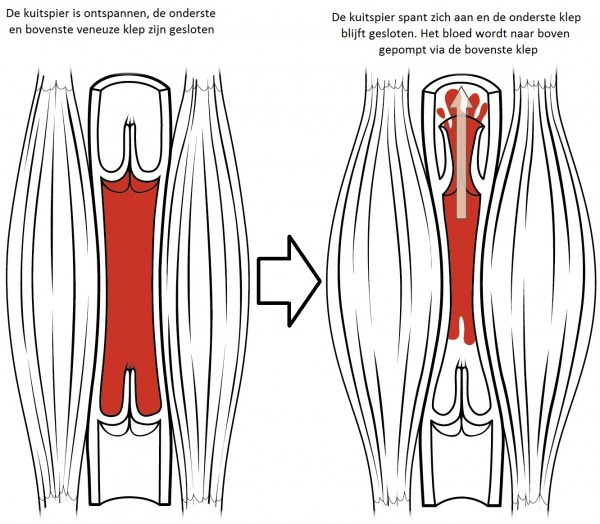


This supporting action of the calf muscle in pumping blood toward the heart is important for us. Research shows that “it takes only one heartbeat to pump blood from the heart to the lower legs, but several strong heartbeats to pump it back up to the heart.”
The mechanism of stepping and releasing in Tai Chi Chuan is critically important for the return of blood to the heart while simultaneously improving circulation in the legs. This calf muscle pump is sometimes called the second heart of the body.
Physicians advise airline passengers to stand up and walk around regularly during long flights. It stimulates circulation in the legs but also promotes healthier circulation of the organs in the torso. The cramped seats of modern commercial airlines force the arms against the rib cage, limiting the volume of the torso and compressing the organs together. This prevents the heart from functioning normally.
Good health depends on the organs of the body. When the organs are healthy and strong, ailments and diseases will occur less frequently. We should not allow stress to reduce the volume of the torso, restricting organ function and impairing the heart.
Stress is not always harmful. We sometimes need tension to stimulate us. Positive stress brims with life energy. Many martial artists, athletes, and performers know how to channel stress into high-energy performance. Properly directed stress can truly work in our favor. The ambition to succeed is the feeling of our conscious heart that provides the energy to realize our aspirations.
Negative states of fear, worry, and despondency, on the other hand, are the cause of muscular tension. The muscles of the rib cage contract and pull the diaphragm upward, while the upper arms simultaneously fall against the rib cage. The space available for the organs in the torso diminishes, circulation deteriorates, and hazardous conditions develop that can result in serious heart disease.
Mother Nature has bestowed upon us a metabolic process capable of renewing the organs of the body. Our torso is like the interior of a dishwasher, and the organs are like reusable plates. We must cleanse the organs as frequently as possible, even before toxins begin to accumulate. Regularly cleansing the organs to keep them in optimal condition is our priority.
Happy people are healthier and live longer than unhappy people. When we are happy, the muscles of the rib cage relax. When we are sad, worried, or unhappy, the muscles of the rib cage contract. The limited space in the torso makes it harder for the organs to function.
The muscle-free movements of Tai Chi Chuan arise from releasing and activating the flow of energy, generating a powerful energetic wave through the body while the muscles—particularly those surrounding the arteries—remain relaxed, producing vasodilation. This creates a constant flow of nutrients and oxygen-rich blood throughout the entire vascular system. This powerful internal energy flow extends far beyond organ cleansing; it helps to purify everything in the body.
Relaxing the rib muscles is the best care we can offer our organs, as it enables them to increase the volume of the torso. This promotes the cleansing of the organs so that they can perform their work effectively and helps to keep the heart vital and in peak condition.
The concept of heart disease prevention has its origins in an insight from my teacher, the world-renowned Grandmaster Professor Cheng Man-Ching, who observed, “The organs of cats and dogs are healthier than those of humans, because their organs hang freely in the body as they move about. This helps to lubricate and oxygenate the organs to keep them healthy, in contrast to the unhealthy human organs that often jostle against each other in the body.”
The information I have gathered and researched through my daily practice with students over the past sixty years leads me to this positive conviction: cleansing the organs is the foundation of staying healthy. The analogy of “organ cleansing as a dishwasher” is one I have carried with me for many years.
This article is part of my lifelong dedication to Tai Chi practitioners. The inner practice of Tai Chi Chuan is like cleansing the body from within. Regularly cleansing the organs, cells, arteries, veins, and tissues of the body is of vital importance to the health of the heart. Cleansing through Tai Chi movements can also help to prevent kidney and liver disease, as well as cancer. It is undeniably helpful in reducing other ailments, diseases, and stress.
Daily practice of Tai Chi Chuan, with heart and mind attuned to feeling the flow of energy pulsing through the body, will keep the doctors at bay. Consistent daily practice of these slow movements is particularly helpful in reducing the burden on hospital staff and physicians.


Colofon:
Written by Yang Style T’ai Chi Ch’uan Grandmaster William C. C. Chen. Original publication: Spring 2015, International Magazine of Tai Chi Chuan, Vol. 39, No. 1. Translation: Ronald de Caluwé, with assistance from Laura Stone. Previously published in TQT Magazine, Vol. 3, No. 10, June 2015.
If you found this article worth reading and (not yet) feel like getting a paid subscription, you can always treat me to a cappuccino!